

Reptile Medicine Is Different Here
A reptile cannot tell us that its basking area has been running a few degrees too cool or that its UVB output has gradually declined. Often, the environment becomes part of the medical history.
That is why a reptile veterinary visit may include much more than examining the animal in front of us.
Our team can help evaluate:
- Diet and supplements
- Enclosure size and setup
- Temperature gradients
- UVB and other lighting
- Humidity
- Substrate
- Shedding
- Behavior and activity
- Weight and growth
- Reproductive health
- Parasite concerns
- Water quality for aquatic species
- Seasonal husbandry changes
- Erichment and safe handling
We recommend routine veterinary examinations for reptiles so we can establish what is normal for your individual pet, identify changes early, and review the husbandry conditions that support their health.
Reptiles We Love Caring For
Different reptiles can have dramatically different nutritional, environmental, reproductive, and medical needs. A care plan for a leopard gecko cannot simply be copied over to a bearded dragon, and an aquatic turtle requires a different setup from a terrestrial tortoise.
Here are a few of the reptiles we see frequently.
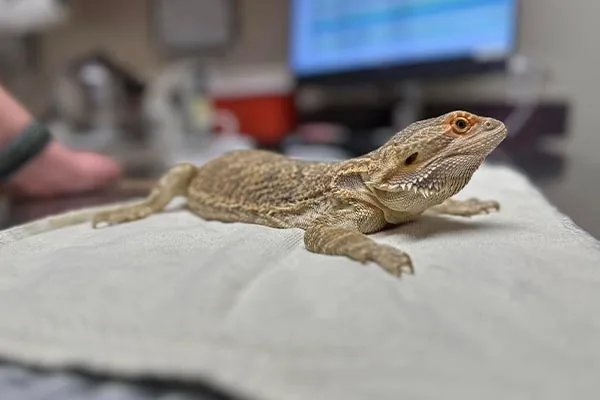
Bearded Dragon Veterinary Care
The head tilts. The side-eye. The dramatic basking poses. There is a reason bearded dragons have developed such a devoted following.
There is also a lot happening behind that laid-back exterior. Bearded dragon care requires close attention to diet, calcium balance, temperature, appropriate UVB exposure, growth, gastrointestinal health, and habitat conditions. Inadequate UVB exposure or nutritional imbalances can contribute to serious metabolic bone disease, making enclosure design an important part of preventive care.
Our veterinarians can help with routine bearded dragon wellness care as well as concerns involving:
- Poor appetite
- Weight loss or slow growth
- Changes in activity
- Abnormal stool
- Difficulty walking
- Swelling or changes in the jaw or limbs
- Abnormal shedding
- Mouth irritation or infection
- Reproductive concerns
- Parasites
- Adenovirus
- Changes in behavior
Adenovirus in Bearded Dragons
Bearded dragon adenovirus is an important infectious disease in this species. Some infected dragons may show few outward signs, while others, particularly younger animals, can develop lethargy, weakness, weight loss, diarrhea, poor growth, or more severe illness. Transmission is believed to occur primarily through fecal-oral contamination.
Bearded Dragon FAQs
Bearded dragons may enter a period of reduced seasonal activity known as brumation. Changes in appetite and activity should never automatically be attributed to brumation, however, because illness and husbandry problems can cause similar signs.
“Mouth rot” generally refers to infectious stomatitis, an infection or inflammation involving tissues in the mouth. Trauma, infection, nutritional problems, and environmental conditions may contribute. Swelling, redness, discharge, difficulty eating, or visible changes inside the mouth deserve veterinary attention.
They can, although many well-socialized bearded dragons tolerate gentle handling. Biting may occur because of fear, stress, food-related responses, discomfort, or individual temperament. Learning your dragon’s body language can make interactions safer for everyone involved.
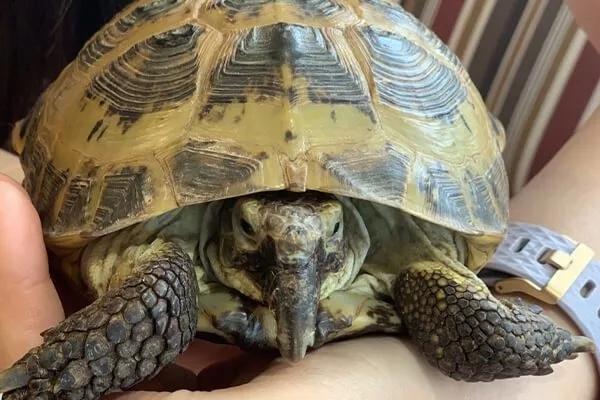
Turtle & Tortoise Veterinary Care
A turtle or tortoise can look wonderfully sturdy. Under that shell, however, these animals have highly specific environmental, nutritional, lighting, and — in aquatic species — water-quality needs.
Turtles and tortoises depend on appropriate calcium metabolism and UVB exposure, and problems with nutrition or husbandry can affect the shell, bones, beak, eyes, growth, mobility, and internal health.
We care for aquatic turtles, terrestrial turtles, tortoises, and other chelonians with concerns involving:
- Shell changes or damage
- Poor appetite
- Abnormal growth
- Eye or ear problems
- Respiratory symptoms
- Beak overgrowth
- Difficulty swimming
- Changes in buoyancy
- Reproductive concerns
- Parasites
- Mobility changes
- Skin problems
- Nutrition
- Habitat and lighting
- Water quality
Water Quality Matters, Too
When your reptile lives in water, its environment and its health constantly interact.
The Veterinary Center for Birds & Exotics offers water quality testing for aquatic reptiles to help owners evaluate an often-overlooked part of turtle husbandry. Water conditions can influence sanitation, skin and shell health, and the overall stability of an aquatic habitat.
If you bring an aquatic turtle to see us, ask whether water testing would be useful. Our team can explain how to collect a sample and what information we need about your current setup.
Turtle & Tortoise FAQs
It depends heavily on the species. Many turtles and tortoises are extremely long-lived animals, which makes bringing one home a significant commitment. Species identification helps establish appropriate expectations for adult size, lifespan, diet, housing, and long-term veterinary care.
There is no universal “turtle diet.” Nutritional needs vary according to species, age, habitat, and whether the animal is primarily herbivorous, omnivorous, or carnivorous. Correct species identification should come before deciding what belongs on the menu.
Modern turtles and tortoises do not have teeth. Instead, they use a keratinized beak to bite and process food. Beak shape and wear can also offer clues about nutrition and husbandry.

Snake Veterinary Care
Snakes have mastered the art of making completely normal behavior look slightly alarming. Skipping a meal? Maybe normal. Hiding for days? Could be normal. Eyes suddenly cloudy? A shed may be coming. Or something may actually need attention.
Knowing the difference gets easier when you understand what is normal for your species and your individual snake.
Our reptile veterinarians see snakes for preventive care and concerns involving:
- Appetite changes
- Weight loss
- Regurgitation
- Respiratory symptoms
- Incomplete sheds
- Retained eyecaps
- Skin or scale changes
- Parasites and mites
- Oral disease
- Reproductive problems
- Egg retention
- Neurologic changes
- Enclosure and husbandry questions
Can a Snake Lay Eggs Without Mating?
Potentially, yes.
Female reptiles can present reproductive surprises. Some female snakes can store sperm following previous breeding, while documented reproductive strategies vary among species. If a snake produces eggs unexpectedly — or develops swelling, straining, behavioral changes, decreased appetite, or other signs that could indicate reproductive activity — a veterinary examination can help determine what is happening.
Reptiles can also experience dystocia, or difficulty passing eggs or offspring, and affected animals may retain eggs for an extended period.
Snake FAQs
Shedding frequency varies with species, age, growth, nutrition, health, and environmental conditions. Younger, rapidly growing snakes generally shed more frequently than mature snakes. Consistently incomplete sheds may point toward problems with humidity, nutrition, parasites, illness, or enclosure setup.
Some do and some do not. Snake reproductive strategies vary considerably by species. Some snakes lay eggs, while others produce live young.
Diet depends on the species. Appropriate prey type, size, frequency, source, and feeding practices all matter. Your veterinarian can help you create a feeding plan based on your snake’s species, age, body condition, and health.
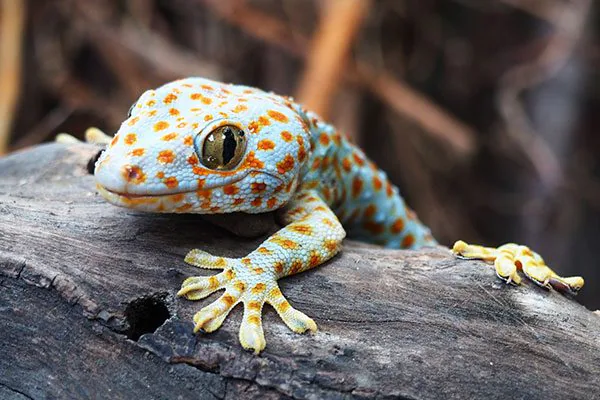
Gecko Veterinary Care
From crested and leopard geckos to enormous Leachianus geckos, “gecko” covers an incredibly diverse group of lizards.
Their ideal diet, temperature, humidity, lighting, enclosure design, adult size, and activity patterns can vary significantly from one species to another. That makes species-specific care especially important.
Our veterinarians can help with:
- Nutrition
- Weight and growth
- Shedding
- Skin problems
- Tail injuries
- Metabolic bone disease
- Reproductive concerns
- Parasites
- Mouth problems
- Eye concerns
- Changes in activity
- Habitat setup
- Temperature and humidity
- UVB recommendations
Gecko FAQs
That depends entirely on the species. Some remain remarkably small, while species such as Leachianus geckos grow much larger. Knowing the exact species before choosing an enclosure helps you plan for its adult size rather than the tiny juvenile you brought home.
Many popular gecko species are nocturnal or crepuscular, meaning they become most active at night or around dawn and dusk. Activity patterns vary, though, and even nocturnal and crepuscular reptiles may benefit from appropriately designed broad-spectrum lighting.
They can be great pets for the right household, but “easy” is relative. A gecko still needs species-appropriate housing, environmental control, nutrition, veterinary care, and a long-term commitment. Choosing the species that matches your expectations can make all the difference.
Reptiles, Children & Other Pets
A reptile can be a fascinating addition to a household, but families need to think about both animal behavior and human health.
Reptiles can carry Salmonella even when they appear healthy and clean, and bacteria can spread from the animal as well as its enclosure, equipment, food, and — in aquatic reptiles — tank water. The CDC recommends that children under 5, adults 65 and older, and people with weakened immune systems avoid contact with reptiles because they have a greater risk of serious illness.
Recent outbreaks have continued to demonstrate that risk, including outbreaks associated with bearded dragons, geckos, chameleons, and turtles.
Good household habits include:
- Washing hands thoroughly after handling reptiles or anything in their enclosures
- Keeping reptile supplies away from food preparation areas
- Supervising interactions with children
- Preventing reptiles from roaming freely throughout the home
- Keeping other household pets away from reptile enclosures unless interactions can be safely controlled
There is another side to introductions, too: the reptile’s stress.
Dogs, cats, children, noise, movement, and handling can all affect a reptile differently. Rather than forcing interaction, create a secure enclosure where your reptile can retreat and control its exposure to household activity.
What About Salmonella From Reptile Food?
Salmonella concerns are not limited to the reptile itself. Reptiles and their environments can carry Salmonella, and feeder animals and other components associated with reptile keeping have also been implicated in human Salmonella infections.
Treat reptile food and feeding equipment with the same care you use around the enclosure. Wash your hands after handling food or equipment, avoid preparing reptile food in areas used for human food, and follow current public-health guidance when outbreaks or recalls affect feeder products.
Meet Some of the Reptile People Behind the Medicine
We could tell you our veterinarians care about reptiles, but their homes make a strong case rather well without our input. Meet the team who loves their cold-blooded pets.
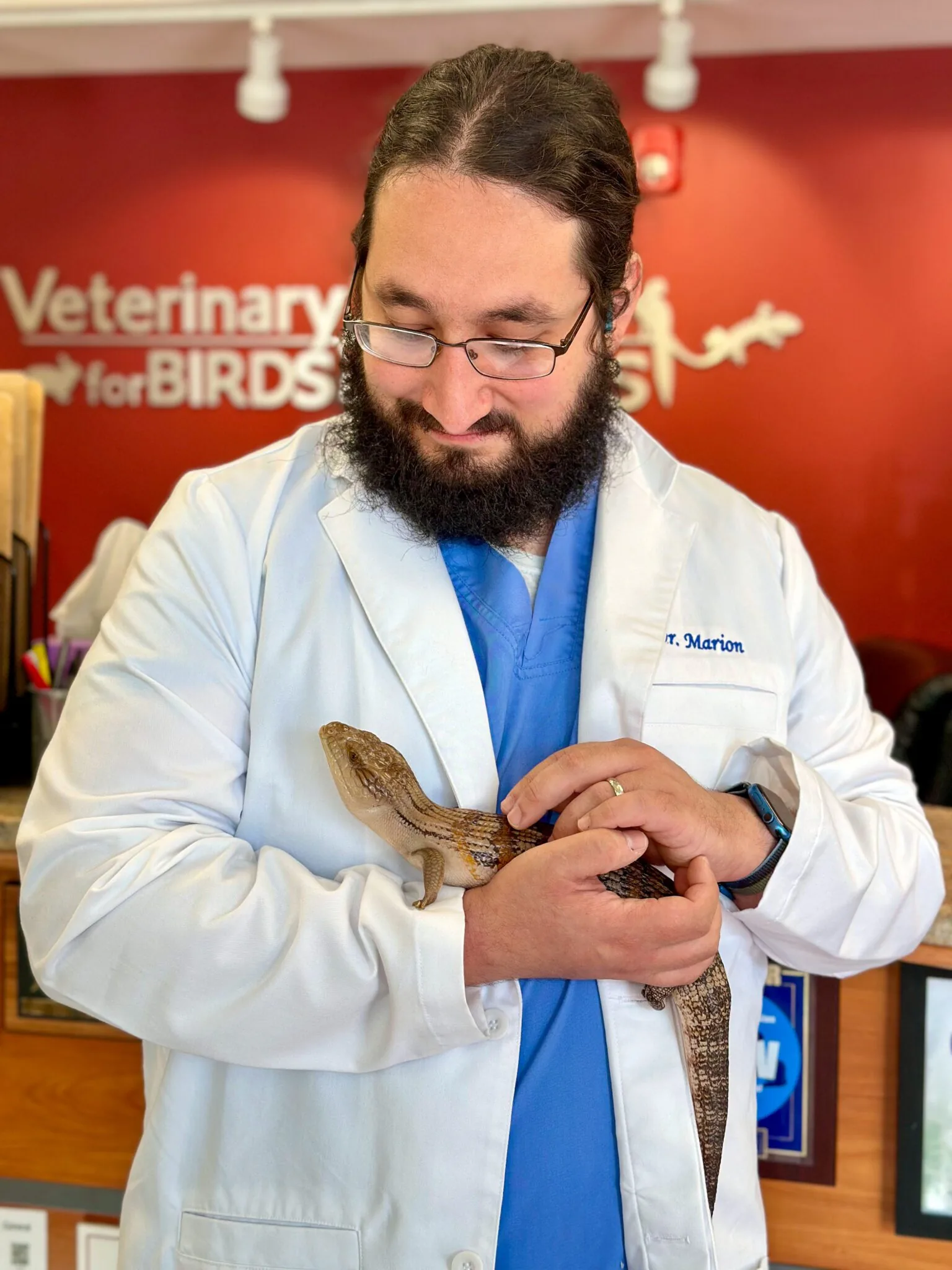
Dr. Jonah Marion
Dr. Marion developed his interest in exotic medicine after working with reptiles, birds, and small mammals at the Greenburgh Nature Center. He later participated in the Cornell University Herpetological Society, reptile outreach programs, and reptile medicine education. Reptile and amphibian medicine remains one of his primary professional interests, and several reptiles have their own room in his home.

Dr. Jean Kheng
Dr. Kheng is VCBE’s ABVP Resident in Reptile & Amphibian Medicine & Surgery. Her background includes work as a reptile zookeeper, and reptiles and amphibians remain her primary clinical interests. Her animal family includes a lizard, tortoise, frog, and two rabbits.

Dr. Emily Schleinkofer
Dr. Schleinkofer brings a particular interest in aquatic animal medicine to VCBE and completed additional training in the care and conservation of aquatic animals. At home, she shares her life with Scoli, a special-needs Leachianus gecko.

Dr. April Hampton
When Dr. Hampton heads home, one of the pets waiting for her is Strawberry, her red-tailed boa. Her veterinary training includes an avian and exotics specialty internship at Angell Animal Medical Center.
Going Somewhere? Your Reptile Has Options.
Finding someone comfortable caring for a reptile can make vacation planning a little more complicated. Fortunately, your pet can vacation here, too.
VCBE boards reptiles and amphibians in addition to birds and exotic mammals. Because heat and lighting requirements vary among reptile species, pets may stay in their own enclosures when practical, or our team can use heat-regulated accommodations designed for reptiles. Aquatic reptiles should arrive with their own appropriately sized small tanks.
We encourage owners to provide the foods and familiar supplies their pets normally use. Boarding reptiles also receive daily weight monitoring so our team can keep a close eye on whether they are eating appropriately during their stay.
Reptiles must meet VCBE’s current examination and screening requirements before boarding, so contact us at (914) 864-1414 before your travel dates, especially for holidays and summer trips, when space fills quickly.
Traveling With Your Reptile?
If your reptile is coming with you instead, start planning early.
Depending on your destination, mode of transportation, and species, domestic or international travel may require veterinary examinations, health certificates, permits, microchipping, testing, or other documentation.
VCBE’s federally accredited veterinarians can assist with domestic and international exotic pet health certificates when applicable. International requirements vary by destination and can change, and USDA recommends contacting an accredited veterinarian early in the travel-planning process. Reptiles can also be subject to rules from agencies beyond USDA depending on the species and destination.
Give yourself plenty of lead time before departure.
Your Reptile Deserves a Veterinarian Who Speaks Reptile
Good reptile care is about understanding how the entire animal and its environment work together. At the Veterinary Center for Birds & Exotics, our veterinarians combine advanced exotic-animal medicine with an enthusiasm for the species we treat every day. Bring us the strange shed. Show us the enclosure photo. Tell us exactly when the appetite changed. Ask whether your UVB setup makes sense.
We want the details. Because when your patient has scales, a shell, sticky toes, or no legs at all, the details can tell us a lot.
Looking for a reptile veterinarian in Westchester County, NY? Call (914) 864-1414 or request an appointment with the Veterinary Center for Birds & Exotics today.