

MBD in Bearded Dragons
The most common signs of MBD, or metabolic bone disease in bearded dragons include lethargy, a poor appetite, trembling or twitching muscles, a soft or swollen jaw, and legs that look bowed or weak. As metabolic bone disease progresses, a dragon may struggle to lift its body off the ground, develop a kinked spine or tail, or suffer fractures from minor bumps.
Metabolic bone disease usually develops when a reptile cannot absorb or use enough calcium to keep its bones strong. Bearded dragons rely on UVB light and a balanced diet to process calcium, so gaps in either area can quietly weaken the skeleton over weeks or months. The good news is that MBD is largely preventable, and early veterinary care can stop it from getting worse. At Veterinary Center for Birds & Exotics, we see bearded dragons with MBD from across Westchester County, often in owners who had no idea anything was wrong. This blog walks through the warning signs, the root causes, what a veterinary visit involves, and the habitat habits that protect your dragon’s bones.
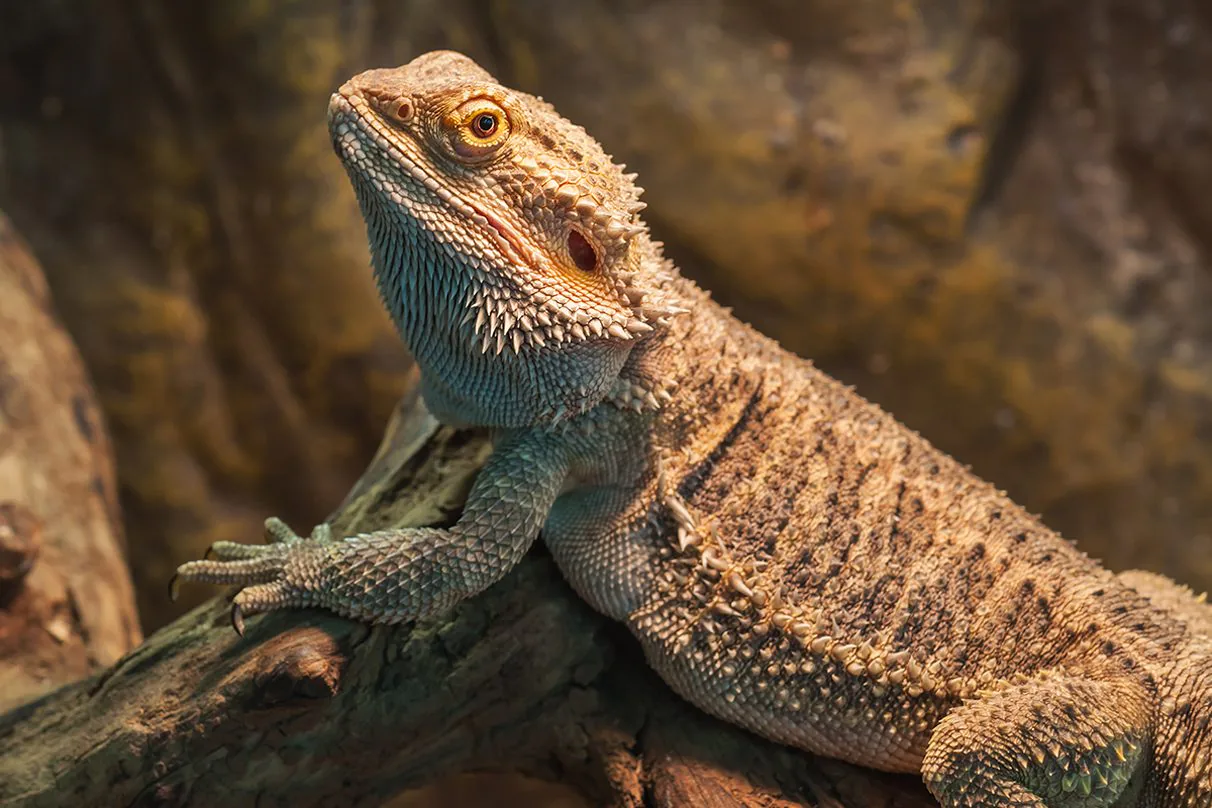
Signs of MBD in Bearded Dragons
Bearded dragon MBD symptoms tend to start subtly and become more obvious as bones lose density. Spotting the early changes gives your veterinarian the best chance to help.
Early Warning Signs
In the beginning, an MBD bearded dragon may simply seem “off.” Many owners mistake these first changes for a quiet day or a picky phase:
- Less activity and more time spent lying flat
- Reduced interest in food or insects
- Small tremors or twitching in the toes, legs, or tail
- Slower or clumsier movements when climbing or walking
- Constipation or fewer droppings than usual
Advanced Symptoms
As metabolic bone disease progresses, the skeleton itself starts to change. The lower jaw may feel soft and pliable, a condition sometimes called “rubber jaw,” or it may look swollen and shortened. Legs can thicken, bow outward, or appear lumpy where the body has tried to reinforce weak bone. The spine or tail may develop bends or kinks. Some dragons drag their bellies because they can no longer push themselves up, and others break bones during normal activity.
Emergency Signs
Severe calcium deficiency can affect muscles and nerves throughout the body. Seizures, sudden paralysis, or an inability to move should be treated as an emergency. Call your exotic veterinarian right away if you notice any of these.
Why Juveniles Need Extra Attention
Baby and juvenile bearded dragons grow quickly, so their bones need a steady supply of calcium. MBD in bearded dragons often shows up during this growth stage, especially in dragons raised without proper UVB lighting. If you adopted a young dragon recently, a wellness exam can confirm that its bones are developing normally.
What Causes Metabolic Bone Disease in Bearded Dragons?
MBD almost always traces back to husbandry and nutrition. Several factors work together, and a problem in one area can cancel out good care in another.
Missing or Weak UVB Lighting
Bearded dragons need UVB rays to make vitamin D3 in their skin, and vitamin D3 lets the body absorb calcium from food. Without it, even a calcium-rich diet cannot do its job. Common lighting mistakes include using a basking bulb with no UVB, placing a UVB bulb behind glass or a plastic cover that blocks the rays, mounting it too far from the basking spot, and keeping a bulb long after its output fades. Many UVB bulbs look bright long after they stop producing useful levels of UVB.
An Unbalanced Diet
Calcium and phosphorus need to stay in the right balance. Feeder insects such as mealworms and crickets contain far more phosphorus than calcium, and many popular fruits and vegetables do as well. A diet that leans heavily on these foods, or skips the supplements your veterinarian recommends, can pull calcium from the bones over time.
Low Temperatures
Reptiles depend on outside heat to digest food. When basking temperatures run too low, a bearded dragon may not process its meals well enough to absorb the nutrients it eats.
Underlying Health Conditions
Less often, kidney disease, gastrointestinal issues, or hormone problems interfere with calcium regulation. Your veterinarian can check for these conditions if husbandry looks correct but symptoms still appear.
Rescued or rehomed dragons deserve a closer look, too. Many come from setups with outdated lighting or a limited diet, so MBD in bearded dragons is common among pets that changed hands. A veterinary visit soon after adoption can reveal bone changes that are not yet visible.
How Do Exotic Vets Diagnose and Manage MBD?
An exam with an experienced reptile veterinarian confirms whether metabolic bone disease is present and how far it has advanced. That information guides the plan for recovery.
What Happens at the Appointment
Your veterinarian will gently handle your dragon to check the jaw, legs, spine, and tail for softness, swelling, or deformity. They will also ask detailed questions about lighting, temperatures, diet, and supplements. Bringing the brand and age of your UVB bulb, plus photos of the enclosure, helps speed things up.
Diagnostic Tools
X-rays show bone density and reveal fractures that are not visible from the outside. Bloodwork can measure calcium levels and check kidney function. Together, these tests help your veterinarian determine whether the cause is nutritional, environmental, or medical.
Veterinary Treatment Options
Care for an MBD bearded dragon depends on severity. Mild cases may improve with prescription supplements and corrected husbandry. Moderate to severe cases sometimes need injectable medications, fluids, assisted feeding, or splinting for fractures. Bones that have already bent may not fully straighten, but treatment can stop the disease from progressing and help many dragons live comfortable lives. Avoid giving extra calcium or vitamin D3 on your own, since too much can cause serious harm. Your veterinarian will tailor the plan and schedule rechecks to track progress.
Supporting Recovery at Home
An MBD bearded dragon in recovery may move more carefully than before. Your veterinarian may suggest a lower-profile enclosure layout with shallow climbing areas and fewer high perches to reduce the risk of falls. Follow their guidance on handling, since fragile bones can break easily. Keep every recheck appointment, as follow-up X-rays show whether bone density is improving.
How Can You Protect Your Bearded Dragon From MBD?
Preventing MBD in bearded dragons costs far less than treatment, and most of it happens through everyday habitat care. A few consistent habits go a long way toward keeping bones strong.
- Use a quality linear UVB tube that spans much of the enclosure, with no glass or plastic between the bulb and your dragon
- Replace UVB bulbs on the manufacturer’s schedule, even if they still light up
- Maintain a proper basking hot spot and a cooler retreat on the opposite side
- Feed a varied diet of leafy greens and appropriate feeder insects
- Follow the calcium and multivitamin plan your veterinarian recommends
- Schedule a wellness exam soon after adoption and once a year after that
Checking Your Setup Regularly
Habitats change over time. Bulbs age, thermostats drift, and decor gets moved. Every few months, confirm your basking temperatures with a digital thermometer and note the date you installed your current UVB bulb. Writing these details down makes it easy to spot problems before they affect your dragon’s health.
Choosing Reliable Information
Care advice online varies widely, and some popular tips can leave gaps in lighting or nutrition. Your exotic veterinarian can review your setup and diet during wellness visits and point out anything that needs adjusting.
Stronger Bones Start With Expert Reptile Care
Metabolic bone disease can change a bearded dragon’s quality of life, but it is preventable and often manageable when caught early. Learning the signs of MBD in bearded dragons, and knowing what causes them, puts you in a strong position to protect your pet.
If your dragon seems weak, shaky, or less active than usual, our team at Veterinary Center for Birds & Exotics is ready to help. We provide comprehensive reptile care for bearded dragons and other exotic pets throughout Westchester County, NY. Call us at (914) 864-1414 to book an exam or a habitat and nutrition review.
Recent Posts
MBD (Metabolic Bone Disease) in Leopard Geckos
The early signs of MBD in leopard geckos include walking with the belly dragging on the ground,…
How to Take Care of a Gecko
Geckos are a favorite among first-time reptile owners. They are quiet, fairly compact, and full of personality,…
How Big Do Leopard Geckos Get?
Most adult leopard geckos grow 7 to 10 inches long from nose to tail tip and weigh…
Snake Mouth Rot: Signs, Causes, and Treatment
The most common signs of snake mouth rot are tiny red spots or bleeding along the gums,…
Do Snakes Lay Eggs?
Do snakes lay eggs? Yes, most snakes lay eggs, but not all of them. Roughly 70 percent…
About Veterinary Centers for Birds and Exotics
If you have been looking for specialized care for your bird or exotic pet, look no further! We have you covered. At our unique animal hospital, we provide care to birds and exotics ONLY—no cats and dogs! We are the only bird and exotic veterinary hospital with a full-time, board certified bird specialist, Dr. Laurie Hess. Dr. Hess, who, with her associates, are the only full-time veterinarians in Westchester County who are residency-trained in bird and exotic medicine and surgery. Call to schedule an appointment for your pet!