

Do Snakes Lay Eggs?
Do snakes lay eggs? Yes, most snakes lay eggs, but not all of them. Roughly 70 percent of snake species are egg-layers, including popular pets such as ball pythons and corn snakes, while the rest, including boa constrictors and garter snakes, give birth to live young. The answer surprises many people, especially owners who assumed every snake hatches from an egg. How a species reproduces depends largely on its evolutionary history and the climate where it lives.
For pet owners, understanding reproduction matters even if you never plan to breed your snake. Female snakes can develop eggs without a male, and complications during egg laying can quickly become serious. At Veterinary Center for Birds & Exotics, we help Westchester County reptile owners understand their snake’s reproductive health and recognize when something is not right. Below, we’ll explain which snakes lay eggs, which give birth to live young, what the egg-laying process looks like, the warning signs of reproductive problems, and when to call your exotic veterinarian.
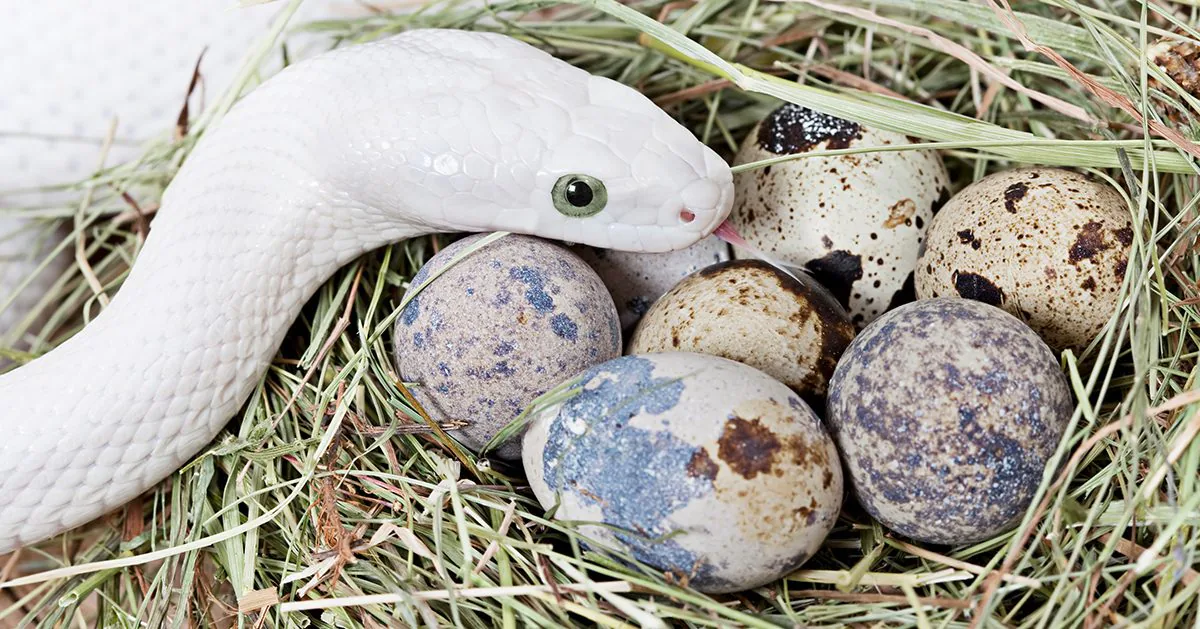
Do All Snakes Lay Eggs?
Not every species follows the same path. Snakes fall into two broad reproductive groups, and knowing which one your pet belongs to helps you understand what to expect.
Egg-Laying Snakes
Snakes that lay eggs are called oviparous, and they make up the majority of species worldwide. The female develops shelled eggs inside her body, lays them in a protected spot, and the young develop outside the mother until they hatch. Popular pet species that lay eggs include:
- Ball pythons
- Corn snakes
- Kingsnakes and milk snakes
- Western hognose snakes
- Carpet pythons and many other python species
Live-Bearing Snakes
Other species give birth to fully formed babies. In most of these snakes, the young develop inside thin membranes within the mother’s body rather than in hard-shelled eggs, and they are born ready to move on their own. Live-bearing pets and native species include boa constrictors, rosy boas, Kenyan sand boas, and garter snakes. Many rattlesnakes and water snakes also give birth to live young.
Why Some Snakes Skip the Egg Stage
Live birth is more common in snakes from cooler climates or unpredictable environments. Carrying young internally allows the mother to bask and keep her developing babies warm, rather than leaving eggs exposed to cold temperatures. In warmer regions, laying eggs in a sheltered spot often works just as well.
Can a Snake Lay Eggs Without a Male?
Yes. Female snakes of egg-laying species can produce infertile eggs, often called slugs, even if they have never been housed with a male. In rare cases, some species can also reproduce through parthenogenesis, a process in which a female produces viable offspring without mating. Either way, a female kept alone can still go through the reproductive cycle.
This surprises many owners who bought a single snake and never expected eggs. Female snakes that lay eggs without a mate may do so once a year or less often, and the process places the same demands on their bodies as a fertile clutch. Knowing this ahead of time helps you watch for changes in your pet.
What Does the Egg-Laying Process Look Like?
When snakes lay eggs, the process follows a fairly predictable pattern.
Signs a Snake Is Gravid
Before snakes lay eggs, they spend several weeks carrying them. A female carrying eggs is described as gravid. Common signs include swelling in the lower third of the body, a reduced appetite, more time spent basking or lying on her back or side, and restless searching around the enclosure. Many egg-laying females also have a pre-lay shed a few weeks before the eggs arrive.
Clutch Size and Appearance
Snake eggs have soft, leathery shells rather than hard shells like bird eggs. Clutch size varies by species and the size of the female. Ball pythons often lay around four to ten eggs, while corn snakes commonly lay a larger clutch of a dozen or more. Healthy, fertile eggs usually look white and plump, while infertile eggs often appear yellowish, small, or misshapen.
Nesting Behavior
Before laying, a gravid female usually searches for a warm, humid, secure spot. Pet owners often provide a nesting box filled with slightly damp material so she has an appropriate place to lay. Most snakes lay eggs and then leave them, though some pythons, including ball pythons, coil around their clutch to protect it.
Incubation and Hatching
Snake eggs typically take around two months to hatch, depending on species and temperature. Owners who plan to breed should work with their veterinarian and experienced breeders to set up proper incubation conditions well before eggs arrive. Hatchlings use a small, temporary egg tooth to slice through the leathery shell, and they may rest inside the opened egg for a day or more before crawling out.
What Reproductive Problems Can Affect Female Snakes?
Most female snakes lay eggs without trouble, but complications do happen. Some can become life-threatening if they are not addressed promptly.
Egg Binding
Egg binding, also called dystocia, occurs when a female cannot pass one or more eggs. Possible causes include an inadequate nesting area, low temperatures, dehydration, poor body condition, oversized or malformed eggs, and underlying illness. A snake that is egg-bound may strain repeatedly, appear weak, or have visible lumps that remain long after she should have finished laying.
Other Reproductive Concerns
Female snakes can also develop follicular stasis, a condition in which developing follicles fail to progress into eggs and are not reabsorbed normally. Infections of the reproductive tract and prolapse, where tissue protrudes from the vent, require immediate veterinary attention.
Warning Signs That Need a Vet
Contact your exotic veterinarian promptly if your female snake shows any of the following:
- Straining without producing eggs
- Laying part of a clutch and then stopping for more than a day
- Tissue protruding from the vent
- Lethargy, weakness, or an inability to move normally
- Swelling that persists well past the expected laying date
- Foul-smelling discharge from the vent
Why Home Remedies Are Risky
Never attempt to massage or manually remove a stuck egg. Doing so can rupture the egg or injure internal organs. Your veterinarian can use X-rays or ultrasound to find out what is happening and recommend safe treatment options.
How Can Owners Support a Snake’s Reproductive Health?
Whether your species is one of the snakes that lay eggs or one that gives birth to live young, and whether or not you plan to breed, good husbandry and regular checkups help female snakes stay healthy through every reproductive cycle.
Know Your Snake’s Sex and Species
Many owners are not sure whether their snake is male or female. Your veterinarian can confirm the sex during an exam. Knowing how your species reproduces helps you prepare for what might happen.
Maintain Proper Husbandry
Correct temperatures, appropriate humidity, fresh water, and a balanced feeding schedule help females stay in good body condition. Females that are underweight or dehydrated face a higher risk of complications.
Think Carefully Before Breeding
Breeding snakes that lay eggs requires careful preparation, an incubator, other equipment, and a home for every hatchling. A pre-breeding exam helps confirm that both animals are healthy and that the female is mature enough to carry eggs safely. However, our veterinarians at Veterinary Center for Birds & Exotics do not recommend breeding snakes.
Schedule Regular Wellness Visits
Annual exams allow your veterinarian to monitor body condition and catch reproductive changes early. If you notice swelling or behavior changes in your female, an earlier visit can provide peace of mind.
Expert Reproductive Care for Your Snake
Most snakes do lay eggs, though many popular species give birth to live young instead. Understanding how your snake reproduces helps you recognize normal behavior and spot problems before they become emergencies.
If you have more questions about whether snakes lay eggs, or your female snake seems gravid or unwell, our team at Veterinary Center for Birds & Exotics offers experienced reptile care for snakes and other exotic pets throughout Westchester County, NY. Call us at (914) 864-1414 to schedule an exam or discuss your snake’s reproductive health.
Recent Posts
MBD (Metabolic Bone Disease) in Leopard Geckos
The early signs of MBD in leopard geckos include walking with the belly dragging on the ground,…
How to Take Care of a Gecko
Geckos are a favorite among first-time reptile owners. They are quiet, fairly compact, and full of personality,…
How Big Do Leopard Geckos Get?
Most adult leopard geckos grow 7 to 10 inches long from nose to tail tip and weigh…
Snake Mouth Rot: Signs, Causes, and Treatment
The most common signs of snake mouth rot are tiny red spots or bleeding along the gums,…
What Do Snake Mites Look Like?
Snake mites look like tiny black, dark red, or brown dots, roughly the size of a pinhead…
About Veterinary Centers for Birds and Exotics
If you have been looking for specialized care for your bird or exotic pet, look no further! We have you covered. At our unique animal hospital, we provide care to birds and exotics ONLY—no cats and dogs! We are the only bird and exotic veterinary hospital with a full-time, board certified bird specialist, Dr. Laurie Hess. Dr. Hess, who, with her associates, are the only full-time veterinarians in Westchester County who are residency-trained in bird and exotic medicine and surgery. Call to schedule an appointment for your pet!