

Lead Toxicity in Exotic Pets
Have You Heard About Lead Toxicity?
Exposure to lead and other heavy metals can affect multiple body systems in humans and non-human animals. Signs of exposure can include lack of coordination, lethargy, weight loss, regurgitation, and diarrhea. If left untreated, heavy metal toxicity can progress to anemia, and even death.
Some construction materials, especially those found in older homes, can contain lead. Exotic pets can be exposed by chewing on flooring, baseboards, and walls, or on other surfaces or objects containing lead such as weights, galvanized wire, or hardware. We most commonly see cases of lead or zinc toxicity in birds, but it can be found in any species. To protect your exotic pet, always provide supervision while they’re out free roaming. Make sure to provide them with a pet-proofed play area free of potential toxins, human health supplements, and metallic objects. Make it a habit to monitor and record any changes in your pet’s appetite, weight, and energy level so that you can identify problems early on.
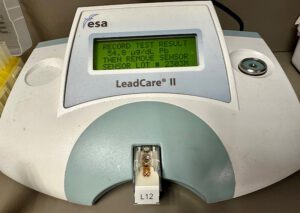
We, at The Veterinary Center for Birds and Exotics, are well-equipped to handle lead toxicity cases, including having a lead testing machine on site, and chelation treatment readily available. Combining history and clinical signs with radiographs and bloodwork allows us to reach a diagnosis and begin treatment immediately, preventing further absorption of the heavy metal into the body tissues.
Is your exotic pet showing signs of illness after getting into on something they shouldn’t? Reach out to us right away to schedule a consult by calling us or scheduling an appointment!
Recent Posts
MBD (Metabolic Bone Disease) in Leopard Geckos
The early signs of MBD in leopard geckos include walking with the belly dragging on the ground,…
How to Take Care of a Gecko
Geckos are a favorite among first-time reptile owners. They are quiet, fairly compact, and full of personality,…
How Big Do Leopard Geckos Get?
Most adult leopard geckos grow 7 to 10 inches long from nose to tail tip and weigh…
Snake Mouth Rot: Signs, Causes, and Treatment
The most common signs of snake mouth rot are tiny red spots or bleeding along the gums,…
Do Snakes Lay Eggs?
Do snakes lay eggs? Yes, most snakes lay eggs, but not all of them. Roughly 70 percent…
About Veterinary Centers for Birds and Exotics
If you have been looking for specialized care for your bird or exotic pet, look no further! We have you covered. At our unique animal hospital, we provide care to birds and exotics ONLY—no cats and dogs! We are the only bird and exotic veterinary hospital with a full-time, board certified bird specialist, Dr. Laurie Hess. Dr. Hess, who, with her associates, are the only full-time veterinarians in Westchester County who are residency-trained in bird and exotic medicine and surgery. Call to schedule an appointment for your pet!