

How to Set Up an Aquatic Turtle Tank
Aquatic turtles such as red-eared sliders, painted turtles, cooters, and musk turtles can live for decades, so the habitat you build today will shape their health for years. To set up an aquatic turtle tank, plan on a minimum of 75 to 150 gallons for a single adult turtle, then add a strong filter, a submersible heater, a dry basking platform, a heat lamp, and a UVB light. Fill the tank with dechlorinated water deep enough for your turtle to swim and flip over freely, and let the filter run for several weeks before your turtle moves in.
Many common turtle problems, from shell infections to eye and respiratory issues, trace back to water quality, heat, or lighting. At Veterinary Center for Birds & Exotics, we often help Westchester County families correct setups that seemed fine at first but did not meet their turtle’s needs. This guide explores how to set up an aquatic turtle tank from the ground up, including equipment, layout, water care, and the mistakes that most often lead to a vet visit. Requirements vary by species, so confirm the details for your turtle with an exotic veterinarian.
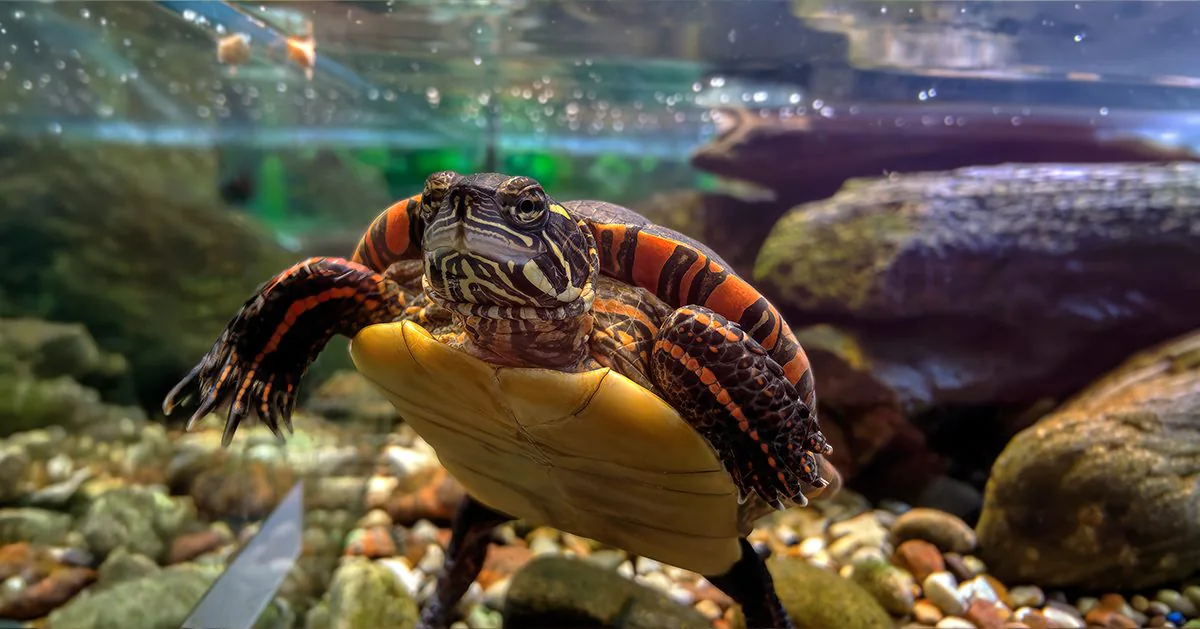
Turtle Tank Requirements
Every aquatic turtle tank needs the same core pieces: enough water, clean filtration, steady warmth, and a place to dry off under light. Planning for your turtle’s adult size from the start saves money and stress later.
Tank Size
A good starting rule is 10 gallons of water per inch of shell. A 4-inch hatchling may do well in a 40-gallon tank, but an adult red-eared slider with a 10-inch shell needs 100 gallons or more. Many owners skip the small starter tanks entirely and buy for the adult size. Long, wide tanks work better than tall, narrow ones because they provide more swimming room and space for a basking area.
Essential Equipment
Before you fill the tank, gather the following:
- A canister or large external filter rated for two to three times your tank’s water volume
- A submersible aquarium heater with a protective guard so your turtle cannot break it
- A basking platform or ramp that lets your turtle climb fully out of the water
- A basking heat lamp placed above the platform
- A reptile-specific UVB bulb, ideally a linear tube
- Two thermometers, one for the water and one for the basking area
- A water conditioner that removes chlorine and chloramine
- A secure screen lid that allows light through and prevents escapes
Why Turtles Need Both Heat and UVB
Turtles are cold-blooded and depend on outside warmth to digest food, fight infection, and stay active. UVB light helps their bodies produce vitamin D3, which they need to absorb calcium for a strong shell and bones. Without both, turtles can develop soft shells, poor appetite, and a weakened immune system.
Step-by-Step Guide to Building the Habitat
Once you have your supplies, the actual build comes together in a few stages. Working in this order makes it easier to adjust equipment before the tank is full of water.
Placing the Tank
Set your aquatic turtle tank on a stand rated for its full weight, since water weighs roughly 8.3 pounds per gallon. Choose a spot away from drafty windows, direct sunlight, and heating vents, all of which can cause temperature swings. Make sure an outlet is close by for the filter, heater, and lights.
Adding Substrate and Decor
Many keepers leave the bottom bare because it is easier to clean. If you prefer a natural look, choose smooth river rocks. Every rock you place in the tank should be at least twice the size of your turtle’s head so it cannot be swallowed. Avoid sand and small aquarium gravel, which turtles can eat and which may lead to intestinal blockages. Add smooth rocks that meet that size rule, driftwood, or sturdy artificial plants for hiding spots, but leave plenty of open swimming space.
Live aquatic plants can look attractive, but many turtles treat them as a salad bar. Hardy, turtle-safe options such as anubias or java fern hold up better than delicate species. Ask your veterinarian before adding any plant you are unsure of, since some are not safe for turtles to eat.
Filling and Heating the Water
Fill the tank with dechlorinated tap water. Most aquatic turtles do well with water at least one and a half to two times as deep as their shell is long, though musk and mud turtles prefer shallower water with easy access to the surface. Install the heater and set it to the range recommended for your species.
Building the Basking Area and Lights
Position the basking platform so your turtle can leave the water completely and dry off. Mount the heat lamp and UVB bulb above the platform, at the distance listed by the manufacturer, with no glass or plastic blocking the UVB rays.
Cycling the Tank
Run the filter in the new aquatic turtle tank for several weeks before adding your turtle, and feed the tank during that time. Regularly add a small amount of fish food or pure ammonia, because beneficial bacteria only grow when they have waste to break down. A tank that simply runs with clean water will not cycle. Learning how to set up an aquatic turtle tank properly includes this waiting period, which leads to cleaner, more stable water.
What Water Temperatures and Lighting Do Aquatic Turtles Need?
The right temperatures and light cycle keep your turtle active, eating well, and better able to fight off illness. Exact numbers depend on species, so ask your veterinarian to confirm the targets for your turtle.
Typical Temperature Ranges
For many popular species, such as red-eared sliders, general guidelines include:
- Water temperature around 75 to 80°F for adults, slightly warmer for hatchlings
- Basking area surface temperature around 90 to 95°F
- Room air temperature that does not drop below the mid-60s at night
Check both thermometers daily. A water temperature that drifts too low can slow digestion and set the stage for respiratory infections.
Light Cycles and Bulb Care
Most aquatic turtles do well with 10 to 12 hours of light per day. A simple outlet timer keeps the schedule consistent. UVB bulbs lose strength well before they burn out, so replace them on the schedule the manufacturer recommends, often every six to twelve months.
How Do You Maintain an Aquatic Turtle Tank?
Turtles eat, swim, and produce waste in the same water, so ongoing maintenance matters as much as the initial setup. A steady routine keeps your aquatic turtle tank clean and healthy.
Routine Tank Maintenance
Remove uneaten food and visible waste daily. Water quality should be tested weekly for ammonia, nitrates, and nitrites. For aquatic turtles, ammonia and nitrate levels should always be 0, and nitrate levels should be below 20 to 40 parts per million. Perform a 25 to 50% water change whenever nitrate levels get too high, using dechlorinated water close to the same temperature. Follow the maintenance guide that came with your filter to determine how often each part needs to be cleaned or replaced. Rinse filter media in removed tank water rather than tap water to protect the beneficial bacteria, and do a deeper tank cleaning every few months, as needed. Some owners feed their turtles in a separate container to keep the main tank cleaner.
Testing Your Turtle’s Water
Turtles do not have gills, but high levels of ammonia and nitrites can still be toxic to them. These problems are invisible, and the water can look clear and clean while levels climb, so a test kit is one of the most useful tools for any aquatic turtle tank. A liquid drip kit or a set of test strips will both do the job. Check ammonia, nitrites, and nitrates at least weekly, and test more often while you are first setting up the tank, when levels can change quickly.
A beneficial bacteria starter, such as API Quick Start, can help a new tank begin cycling by adding live bacteria to the water. It is also worth using after a large cleaning, since a major water change or a deep filter cleaning can throw off your bacteria populations.
Common Setup Mistakes
Problems we frequently see at Veterinary Center for Birds & Exotics include tanks that are too small, filters that cannot keep up with turtle waste, basking areas without UVB, and heaters with no protective guard. Each one can lead to health issues over time.
Signs Your Turtle Needs a Checkup
Contact an exotic veterinarian if your turtle has swollen or closed eyes, soft or flaking shell areas, bubbles from the nose, trouble swimming level, or a loss of appetite. These signs often point to a habitat issue combined with illness. Bring photos of your aquatic turtle tank, your thermometer readings, and the age of your UVB bulb to the appointment so your veterinarian can review the full picture.
Hygiene for the Whole Household
Turtles can carry Salmonella bacteria without looking sick. Wash your hands after handling your turtle or anything in the tank, and clean equipment away from kitchen sinks and food preparation areas.
Expert Support for Your Turtle’s New Home
Knowing how to set up an aquatic turtle tank correctly gives your turtle a strong foundation for a long, healthy life. With proper space, filtration, heat, and UVB, plus a consistent cleaning routine, your aquatic turtle tank can become a stable home for many years.
If you have questions about how to set up an aquatic turtle tank for your specific species, or you want a professional review of your current habitat, our team at Veterinary Center for Birds & Exotics can help. We offer comprehensive reptile and turtle care for families throughout Westchester County, NY. Call us at (914) 864-1414 to schedule a wellness exam for your turtle.
Recent Posts
MBD (Metabolic Bone Disease) in Leopard Geckos
The early signs of MBD in leopard geckos include walking with the belly dragging on the ground,…
How to Take Care of a Gecko
Geckos are a favorite among first-time reptile owners. They are quiet, fairly compact, and full of personality,…
How Big Do Leopard Geckos Get?
Most adult leopard geckos grow 7 to 10 inches long from nose to tail tip and weigh…
Snake Mouth Rot: Signs, Causes, and Treatment
The most common signs of snake mouth rot are tiny red spots or bleeding along the gums,…
Do Snakes Lay Eggs?
Do snakes lay eggs? Yes, most snakes lay eggs, but not all of them. Roughly 70 percent…
About Veterinary Centers for Birds and Exotics
If you have been looking for specialized care for your bird or exotic pet, look no further! We have you covered. At our unique animal hospital, we provide care to birds and exotics ONLY—no cats and dogs! We are the only bird and exotic veterinary hospital with a full-time, board certified bird specialist, Dr. Laurie Hess. Dr. Hess, who, with her associates, are the only full-time veterinarians in Westchester County who are residency-trained in bird and exotic medicine and surgery. Call to schedule an appointment for your pet!