

How Often Do Snakes Shed?
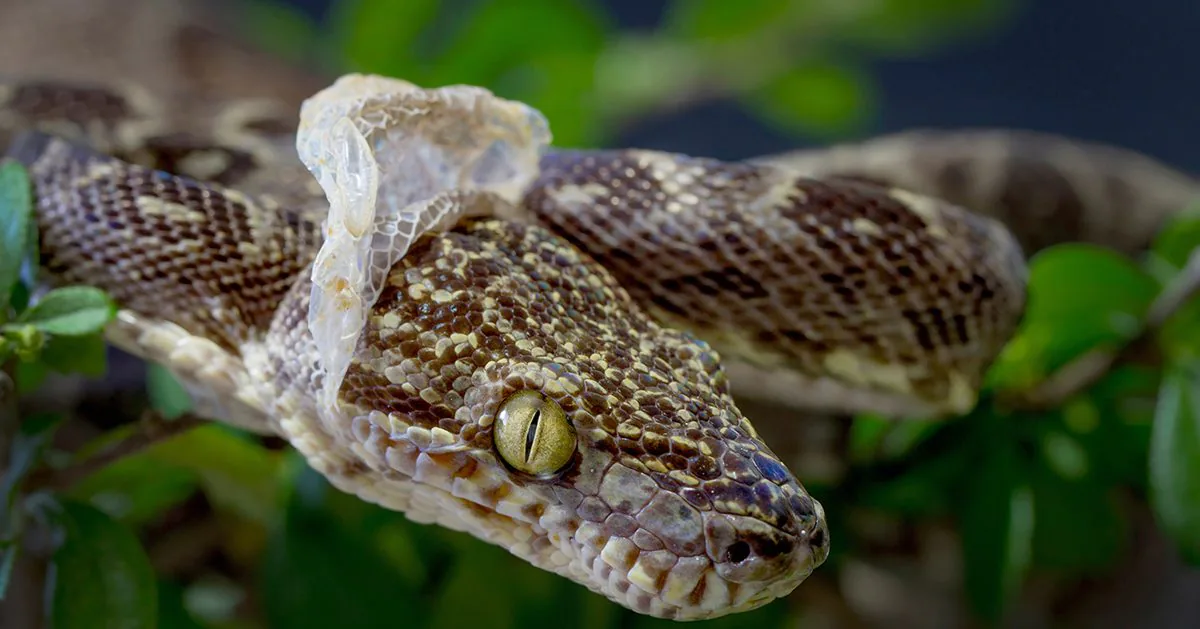
How often do snakes shed? Young, growing snakes typically shed every two to four weeks, while adult snakes usually shed every one to three months. The exact timing depends on the species, age, growth rate, diet, and overall health, so a healthy snake’s shed schedule can vary quite a bit from one individual to the next. Shedding, also called ecdysis, lets a snake replace worn outer skin and make room for growth. For new owners, the first shed can be a surprise. A snake may suddenly turn dull and cloudy-eyed, stop eating, and hide for days before leaving behind a perfect, inside-out copy of itself.
Knowing how often snakes shed, and what a healthy shed looks like, helps you spot problems early. At Veterinary Center for Birds & Exotics, we have experience caring for snakes with incomplete or irregular sheds, and most cases trace back to habitat conditions that are simple to correct. This blog covers typical shed frequency, the signs that a shed is on the way, common shedding problems, and how your exotic veterinarian can help Westchester County snake owners keep things on track.
How Many Times Do Snakes Shed?
The number of sheds per year changes throughout a snake’s life. Growth is the biggest driver, so young snakes shed far more often than mature adults.
Shedding by Age
Hatchlings often have their first shed within a week or two of hatching. During their first year, many young snakes shed every few weeks as they grow quickly. Once a snake reaches adult size, growth slows, and so does shedding. Many adult snakes shed somewhere between four and twelve times a year, while large, slow-growing adults may shed even less often.
Shedding by Species
Different species follow different patterns. As a general guide:
- Ball pythons often shed monthly as juveniles and every four to eight weeks as adults
- Corn snakes commonly shed every few weeks while young and every one to three months as adults
- Kingsnakes and milk snakes tend to follow a schedule similar to corn snakes
- Larger boas and pythons may shed less frequently once fully grown
These are averages rather than rules. Tracking your own snake’s sheds gives you the most useful baseline.
If you have been asking, “How often do snakes shed in my species?” a breeder’s records or your veterinarian can offer a helpful starting point. Remember that a snake’s first year often looks very different from its adult years.
Other Factors That Affect Frequency
Several conditions can speed up or slow down shedding. Snakes that eat more often may grow and shed faster. Skin injuries can trigger an extra shed as the body repairs damaged tissue. Seasonal changes and breeding activity can also shift the schedule.
What Are the Signs a Snake Is About to Shed?
A snake’s body goes through several visible stages before the old skin comes off. Recognizing these stages helps you avoid stressing your snake at a sensitive time.
Going “Into Blue”
One of the first signs is a cloudy, bluish tint over the eyes. Snakes do not have eyelids. Instead, a clear scale called the spectacle, or eye cap, covers each eye and is shed along with the rest of the skin. As fluid builds up between the old and new layers, the eyes turn milky and the skin looks dull or grayish. Many owners call this stage being “in blue.”
Behavior Changes Before a Shed
Because their vision is temporarily reduced, snakes often act differently during this period. Common behavior changes include:
- Hiding more often and spending less time exploring
- Refusing meals or showing less interest in food
- Acting more defensive or easily startled
- Soaking in the water dish more than usual
- Rubbing the nose against decor or rough surfaces when the shed begins
Timeline of a Typical Shed
The cloudy eyes usually clear a few days before the actual shed. Shortly after, the snake rubs its snout to loosen the skin and crawls out of the old layer. The whole process, from first signs to finished shed, often takes about one to two weeks. Many keepers limit handling during this window to reduce stress. Once the shed is complete, check the old skin to confirm it came off in one piece and includes both eye caps and the tail tip.
What Causes Shedding Problems in Snakes?
A healthy shed usually comes off in one complete piece. When patches of old skin stay stuck, veterinarians call it dysecdysis.
Low Humidity and Dehydration
Humidity is the most common factor behind a poor shed. Each species has its own humidity needs, and an enclosure that runs too dry makes the old skin brittle and difficult to remove. Dehydration has a similar effect, so snakes need constant access to fresh, clean water.
Missing Rough Surfaces
Snakes rely on rocks, branches, and textured decor to start a shed. An enclosure with only smooth surfaces can make it harder for a snake to get the process going. Many keepers also provide a humidity hide, an enclosed shelter lined with a damp material such as sphagnum moss, which gives the snake a moist retreat during the shedding period. Ask your veterinarian whether this suits your species.
Health Issues That Affect Shedding
Mites, skin infections, poor nutrition, injuries, and internal illness can all interfere with normal shedding. Snakes that shed unusually often may be reacting to skin damage or an infection, while those that rarely shed may have nutritional or metabolic problems.
Why Stuck Shed Matters
Retained skin is more than a cosmetic issue. Rings of old skin around the tail tip can restrict blood flow, and retained eye caps can lead to eye problems if they build up over multiple sheds. Pulling at stuck skin yourself can tear the delicate new layer underneath, so it is best to have an exotic veterinarian evaluate and address any retained shed.
When Should You See a Vet About Your Snake’s Shed?
Many shedding issues improve once husbandry is corrected, but some situations call for professional care. A veterinary visit also helps uncover hidden problems that affect how often snakes shed.
Reasons to Schedule an Exam
Contact your exotic veterinarian if your snake has retained skin after a shed, especially around the eyes or tail tip. A visit is also wise if your snake sheds much more or much less often than usual, sheds in small pieces repeatedly, has visible mites, or shows swelling, discoloration, or wounds on the skin.
What Your Veterinarian Will Check
During the exam, your veterinarian will inspect the skin, eyes, and tail for retained shed, check for mites or infections, and assess body condition. They will also ask about temperatures, humidity levels, substrate, hides, and feeding habits. Bringing photos of your enclosure and readings from a digital hygrometer can help pinpoint the cause.
Keeping a Shed Log
Writing down the date and quality of each shed helps you notice patterns over time. A shed log also gives your veterinarian valuable information, especially if your snake develops repeated problems. Note the dates your snake went into blue, refused meals, and finished the shed, along with any stuck patches you noticed.
Supporting Healthy Sheds for the Life of Your Snake
So, how often do snakes shed? Young snakes shed every few weeks, and adults usually shed every one to three months, with each species and individual following its own rhythm. Learning your snake’s pattern helps you catch changes before they turn into health problems.
If you have questions about how often snakes shed, or your snake is struggling with stuck skin, our team at Veterinary Center for Birds & Exotics provides thorough reptile care for snakes and other exotic pets throughout Westchester County, NY. Call us at (914) 864-1414 to schedule an exam or a habitat review for your snake.
Recent Posts
MBD (Metabolic Bone Disease) in Leopard Geckos
The early signs of MBD in leopard geckos include walking with the belly dragging on the ground,…
How to Take Care of a Gecko
Geckos are a favorite among first-time reptile owners. They are quiet, fairly compact, and full of personality,…
How Big Do Leopard Geckos Get?
Most adult leopard geckos grow 7 to 10 inches long from nose to tail tip and weigh…
Snake Mouth Rot: Signs, Causes, and Treatment
The most common signs of snake mouth rot are tiny red spots or bleeding along the gums,…
Do Snakes Lay Eggs?
Do snakes lay eggs? Yes, most snakes lay eggs, but not all of them. Roughly 70 percent…
About Veterinary Centers for Birds and Exotics
If you have been looking for specialized care for your bird or exotic pet, look no further! We have you covered. At our unique animal hospital, we provide care to birds and exotics ONLY—no cats and dogs! We are the only bird and exotic veterinary hospital with a full-time, board certified bird specialist, Dr. Laurie Hess. Dr. Hess, who, with her associates, are the only full-time veterinarians in Westchester County who are residency-trained in bird and exotic medicine and surgery. Call to schedule an appointment for your pet!